Claude for SMBs, AI Backlash, ChatGPT Ads, AI Darwinism, Hardware Hurdles
Claude vs SMB SaaS
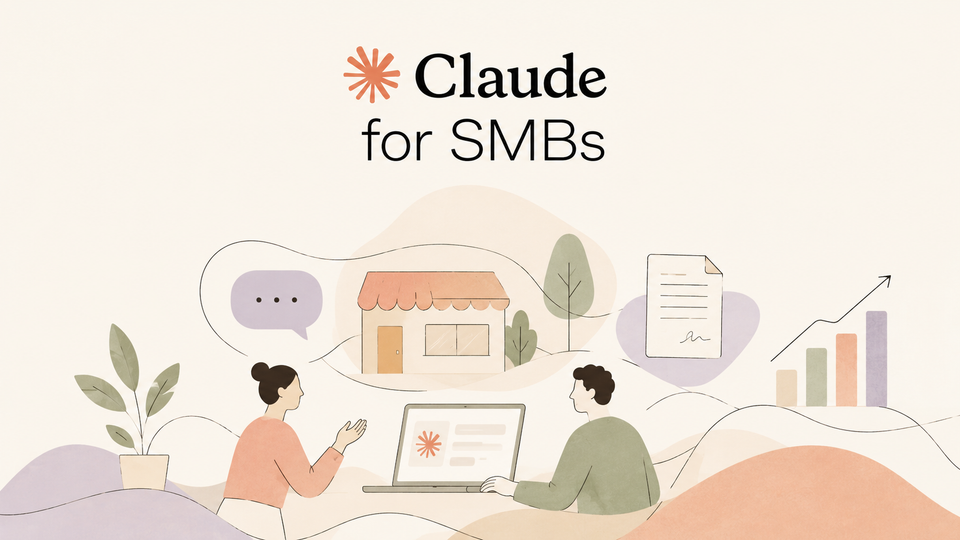
On the heels of its "Claude for Legal" drop this week, Anthropic has introduced "Claude for Small Business." It's not a direct replacement for SMB SaaS; it integrates the existing "stack": Quickbooks, PayPal, HubSpot, Canva, Docusign, Google Workspace, Microsoft 365. Using the underlying data it can plan, analyze and execute various functions and provide business insights. "It ships with 15 ready-to-run agentic workflows across finance, operations, sales, marketing, HR, and customer service. It also includes 15 skills built on the repeatable tasks owners told us slow them down most." To promote these tools Claude is doing online tutorials and an urban roadshow that includes Chicago, Dallas, Salt Lake City, Baltimore, San Jose and eight other US cities. Late last year OpenAI did a similar SMB tour called Small Business Jam. Like Claude, ChatGPT also has dedicated online content for SMBs. Out of the gate Claude starts to solve the SaaS/tool fragmentation problem. It isn't initially competitive with SaaS, but could turn SMB SaaS companies into "back-end" data providers (though switching costs will be high in many cases). It mediates the customer relationship, the same way Google stands between publishers and readers, and thus becomes a gatekeeper. It could make some SaaS tools vulnerable to substitution or later replacement by Claude itself. SaaS companies will need to make their software much more capable, intuitive and agent-ready to survive, should this take flight.

AI Adoption Growing, So Is the Backlash
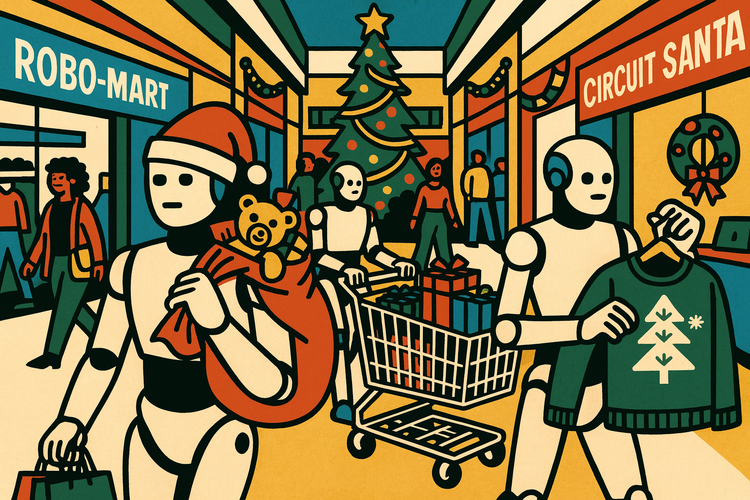
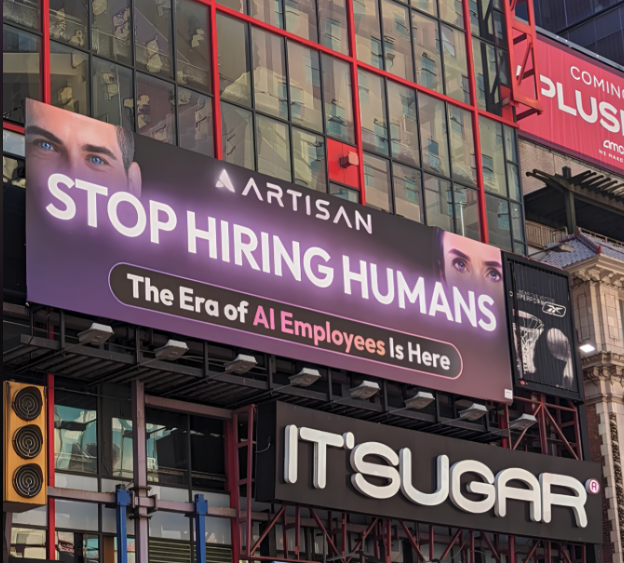
According to a Q1 2026 Gallup Poll, 50% of all US employees now use AI in the workplace. And Ramp data show about 50% of US businesses are paying for AI. Dialog's January 2026 survey found that roughly 75% of online US adults (n=709) had used an AI tool in the past 6 months. Our second 2026 consumer survey found that 56% had used AI for local search (n=800). These adoption numbers continue to grow despite some erosion of user trust. But what the numbers don't show is that a very real backlash against AI is happening. Gen Z has been rapidly souring on AI despite using it. The backlash extends beyond Gen Z, however, and is a result of multiple factors, building over time. Those include opposition to data centers, job displacement, use of AI for domestic surveillance, and growing resentment of tech billionaires. At the highest level, some AI companies suggest their objective is to make humans obsolete (see image). There's also the fact that many big tech company CEOs appear indifferent to the impact of their companies' actions on society. Most people "in the industry" seem generally clueless about the depth and pervasiveness of the popular resentment, as they fixate on leaderboards or some cool new MCP automation. The AI companies have badly fumbled their messaging and wrecked their brand reputations. That's already having negative impacts, from the defeat of data centers to the likely rejection of new AI devices.
ChatGPT Needs Ads to Work
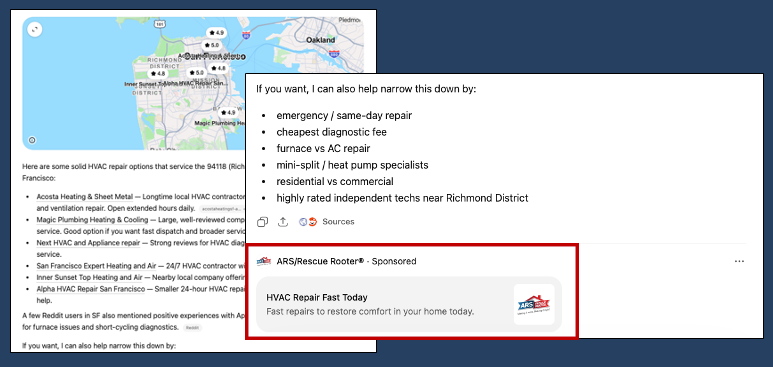
OpenAI reportedly just missed its own internal growth targets, which the company denies. Some of that has to do with brand missteps and poor management decisions: chasing too many initiatives. Claude has been the chief beneficiary of those missteps (Anthropic has passed OpenAI's ARR). Despite OpenAI's recent "pivot" to SMBs and the enterprise, it's still relying heavily on consumers for future revenue growth. According to reporting by The Information, OpenAI expects 50% of 2030 revenue to come from consumers, which includes ad revenue. The company recently announced it was making ads more widely available and introduced a new self-service Ads Manager. OpenAI is explicitly appealing to SMBs as well as larger brands. The company also has added PPC bidding and new analytics. A report from Similarweb estimates there are about 1,000 active ChatGPT advertisers. Unlike other platforms, ChatGPT will allow only one advertiser per "conversation turn." The report shows a range of CTRs depending on several variables, from 0.50% to 5.4%. Thus ChatGPT ads outperform Google Display Ads but mostly underperform paid search ads. The report assumes a $60 CPM and $12 CPC. The platform is immature but evolving rapidly, out of necessity. Currently, only free and low-fee Go ChatGPT customers see ads but that could change over time. The ad example below comes from a multi-location HVAC company (PE owned), but the creative is weak. Ads appearing in AI results will need to be fundamentally different from traditional PPC ads to be effective.
AI Usage Gets More Nuanced
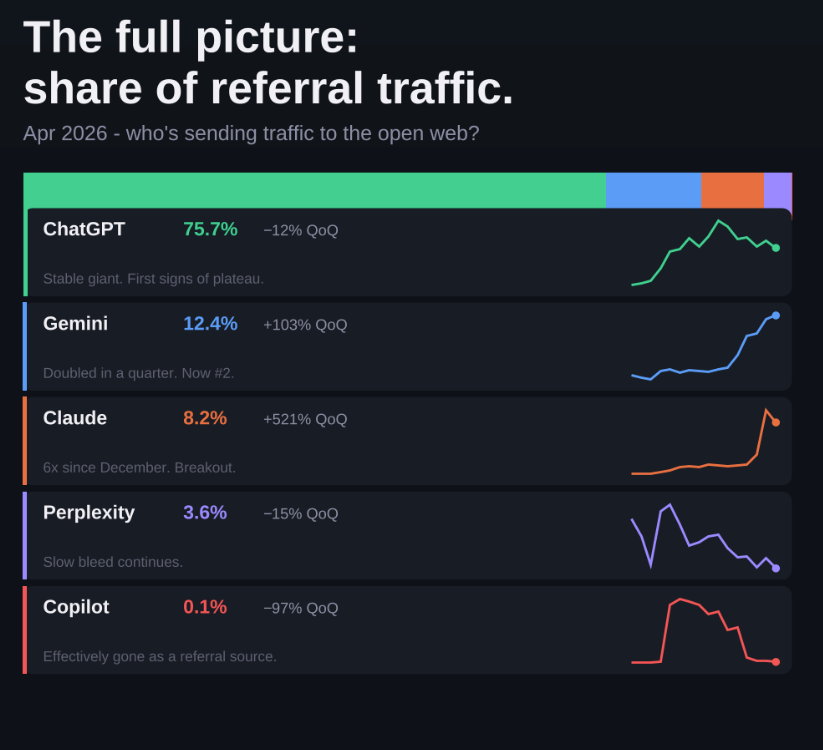
Nearly four years in, the AI platform market is starting to shake out. It's shaping up as a three-way battle between ChatGPT, Gemini and Claude. Copilot, with Microsoft's vast resources, will remain, but has limited traction. Perplexity and Grok are fading. ChatGPT is still the market leader but Gemini is now a clear number two, bolstered by Google's monopolies, while Claude has experienced triple-digit growth. Recent Morning Consult survey data suggest people are not simply choosing one AI over another; they're making choices about when to use each of these tools. ChatGPT has the broadest and most varied usage. Gemini is seen as an extension of search, not a "companion" or "collaborator." According to the survey, Gemini is being used for the kinds of things people do in Search. Gemini's growth has eaten into ChatGPT's usage for "utility tasks," while Claude appears to be winning in professional contexts. Copilot has broad awareness and distribution in Microsoft software but that's not converting into loyalty and frequency. Meanwhile Grok's usage is falling and Perplexity has seen a significant YoY usage decline. In short, Gemini owns "utility search," ChatGPT dominates an array of other use cases and Claude is capturing professionals and enterprise users. Interestingly, there was 40% to 60% overlap between ChatGPT and Gemini, which indicates complementary usage. That's similar to what we find in local: AI and Google are being used as complementary tools. But AI is far more influential on buyers than traffic referrals indicate; the vast majority of people don't CTR from AI answers. So referrals aren't the true measure of AI influence.
Outlook for AI Hardware
The metaverse is a cautionary tale. Promoted as the future of digital media and entertainment, Facebook's parent spent an estimated $80 billion on virtual reality over the last half decade. But consumer demand never truly materialized; part of this is Facebook's declining reputation. The company did manage to sell 9 million AI-powered Ray-Ban smart glasses since 2023. (Meta is now being sued for their privacy violations.) Apple is reportedly developing its own AI glasses for Q4 or Q1 next year. And OpenAI is going to produce a smartphone and perhaps other hardware devices. Beyond this, Google just announced the Googlebook, with Gemini at the center. All of these products make AI a centerpiece of the user experience and assume people will want them. But that may be wildly incorrect, amid the growing AI backlash. A March survey from Gartner found 50% of consumers don't want to do business with brands that use generative AI in content, advertising or customer service. That isn't hardware – though the Microsoft Copilot PC failed – but there's also this finding from Washington State University: use of "AI" in product descriptions reduces consumer purchase intent, especially for higher-risk (read: high consideration) products or services. Most of the big US tech companies have burned through their good will; Apple isn't far behind. And they may have a very difficult time selling new AI-centric devices. It's foreseeable that, unless there's a genuine breakthrough, OpenAI's phone (and other devices) will flop because the company's brand perception has declined dramatically.
Source: Google
Lightning Round:
- Investors punishing some SaaS companies, not others re AI.
- 35% of newer websites are AI generated.
- Median time from publication to AI citation: 7 days.
- Workers faking AI usage ("tokenmaxxing") to appease bosses.
- How AI Mode changes the game for local businesses.
- Like Uber, ServiceNow blew through AI token budget early.
- Risks and security challenges of agentic systems are massive.
- Survey: no real productivity gains from AI adoption – so far.
- Rise of the "non-human" internet; how far away is it?
- Litigants' use of chatbots waives attorney-client privilege.
- Mayo Clinic AI detects pancreatic cancer 3 years before doctors.
- First driverless semi trucks now on the road.